Permaculture in Mauritius: Designing Food Sovereignty for a Resilient Island Future
As Mauritius imports 75% of its food and faces mounting climate threats, permaculture offers a proven design system for food security, ecological restoration, and community resilience. From food forests to swales, discover how this 40-year-old movement could transform the island.
In the heart of the Indian Ocean, Mauritius faces a critical challenge: importing over 75% of its food while possessing the climate, knowledge, and land to grow abundance. Permaculture offers a revolutionary pathway to food sovereignty, ecological restoration, and community resilience.
What is Permaculture?
Permaculture (permanent + agriculture/culture) is a design science that creates sustainable human settlements by mimicking natural ecosystems. Developed in the 1970s by Australians Bill Mollison and David Holmgren, it combines traditional knowledge with modern ecological understanding.
Unlike conventional agriculture that fights nature with chemicals and machinery, permaculture works with natural systems to create self-sustaining food forests, water systems, and communities.
Earth Care
Regenerate soil, protect biodiversity, and restore ecosystems. The earth is our foundation - healthy soil means healthy food.
People Care
Meet human needs while building community resilience. Food security, health, and wellbeing for all people.
Fair Share
Distribute surplus and limit consumption for equity. Share abundance with others and return surplus to the earth.
Why Mauritius Needs Permaculture
Food Security Warning
The COVID-19 pandemic and Russia-Ukraine conflict exposed Mauritius's dangerous dependence on food imports. Supply chain disruptions caused price spikes of 30-50% on essential goods.
Import Dependency Crisis
Mauritius imports over 75% of its food, spending billions of rupees annually that could circulate in the local economy. This creates extreme vulnerability to global price fluctuations.
Climate Vulnerability
Increasing cyclone intensity, unpredictable rainfall, and rising temperatures threaten conventional agriculture. Permaculture's resilient design can withstand extreme weather.
Soil Degradation
Decades of sugarcane monoculture and chemical-intensive farming have depleted soil health. Permaculture regenerates soil through composting and polyculture systems.
Water Scarcity
Climate change is making water increasingly scarce. Permaculture's water harvesting and conservation techniques can reduce water needs by 80%.
Designing Your Food Forest: The Zone System
Permaculture organizes land into concentric zones based on frequency of use and energy requirements. This efficient design minimizes work while maximizing yields.
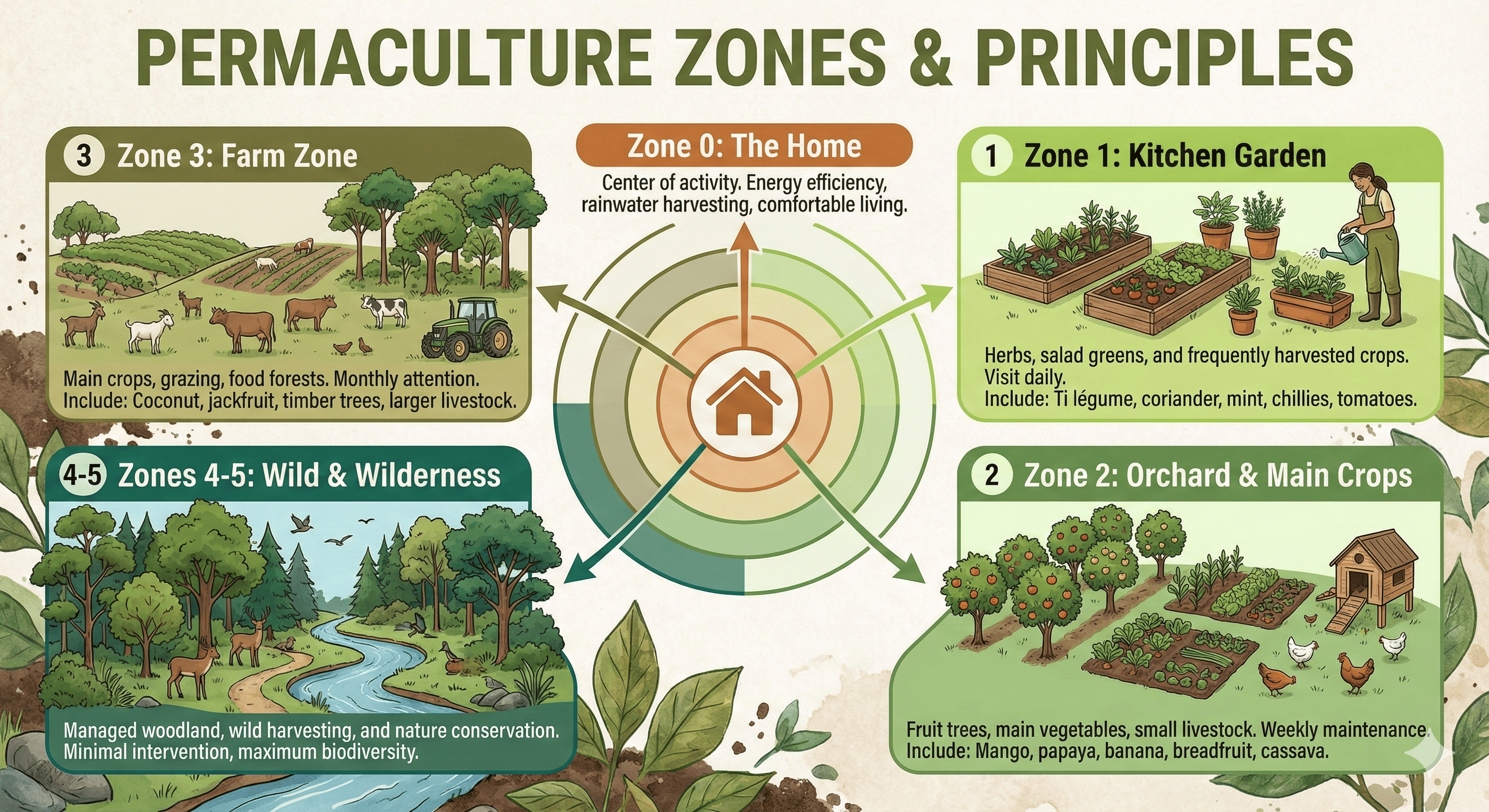
Zone 0: The Home
The center of activity - your house. Design for energy efficiency, rainwater harvesting, and comfortable living.
Zone 1: Kitchen Garden
Herbs, salad greens, and frequently harvested crops. Visit daily. Include: Ti légume, coriander, mint, chillies, tomatoes.
Zone 2: Orchard & Main Crops
Fruit trees, main vegetables, small livestock. Weekly maintenance. Include: Mango, papaya, banana, breadfruit, cassava.
Zone 3: Farm Zone
Main crops, grazing, food forests. Monthly attention. Include: Coconut, jackfruit, timber trees, larger livestock.
Zones 4-5: Wild & Wilderness
Managed woodland, wild harvesting, and nature conservation. Minimal intervention, maximum biodiversity.
The Mauritian Food Forest Guild
A guild is a harmonious grouping of plants that support each other - like a natural community. Here's a perfect tropical guild for Mauritius:
Mango Tree
Canopy layer - provides shade and fruit
Banana
Sub-canopy - quick yields, mulch production
Sweet Potato
Ground cover - suppresses weeds, edible tubers
Pigeon Pea
Nitrogen fixer - improves soil fertility
Lemongrass
Pest deterrent - aromatic barrier
Comfrey
Dynamic accumulator - brings up nutrients
Pro Tip: Stacking Functions
Each element in a guild should serve multiple purposes. Banana provides food, shade for understory, mulch from cut leaves, and habitat for beneficial insects. This "stacking" maximizes productivity per square meter.
Case Study: La Meule Farm, Mauritius
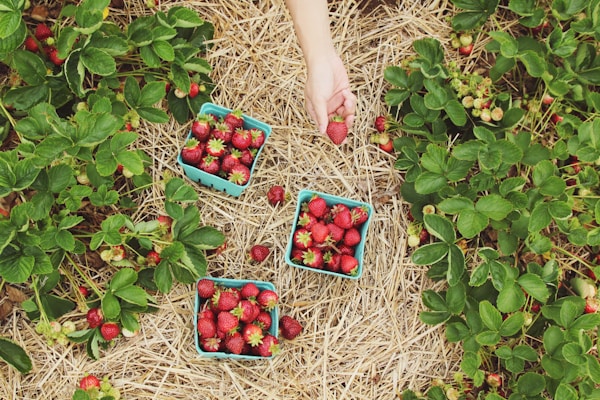
La Meule Farm in the south of Mauritius demonstrates permaculture's potential on the island. Starting with degraded sugarcane land, the farm has transformed into a thriving food forest producing over 50 varieties of fruits, vegetables, and herbs.
Getting Started: Your First Steps
Observe Your Land
Spend one full year observing sun patterns, water flow, wind direction, and existing ecosystems before making major changes.
Start Small
Begin with a kitchen garden (Zone 1) near your home. Master small-scale growing before expanding to larger areas.
Build Soil First
Healthy soil is the foundation. Start composting, collect fallen leaves, and practice no-dig gardening to regenerate your soil.
Plant Trees Early
Fruit trees take years to mature. Plant them first! Mango, breadfruit, and moringa are excellent choices for Mauritius.
📚 Recommended Books
- • "Introduction to Permaculture" - Bill Mollison
- • "Gaia's Garden" - Toby Hemenway
- • "Tropical Permaculture Guidebook" - Permatil
🏛️ Local Organizations
- • Mission Verte - Environmental NGO
- • Food and Agricultural Research Council (FARC)
- • Mauritius Organic Movement
Ready to Start Your Permaculture Journey?
Whether you have a small balcony or several hectares, permaculture principles can transform your space into a productive, resilient ecosystem. Start today - the best time to plant a tree was 20 years ago, the second best time is now.