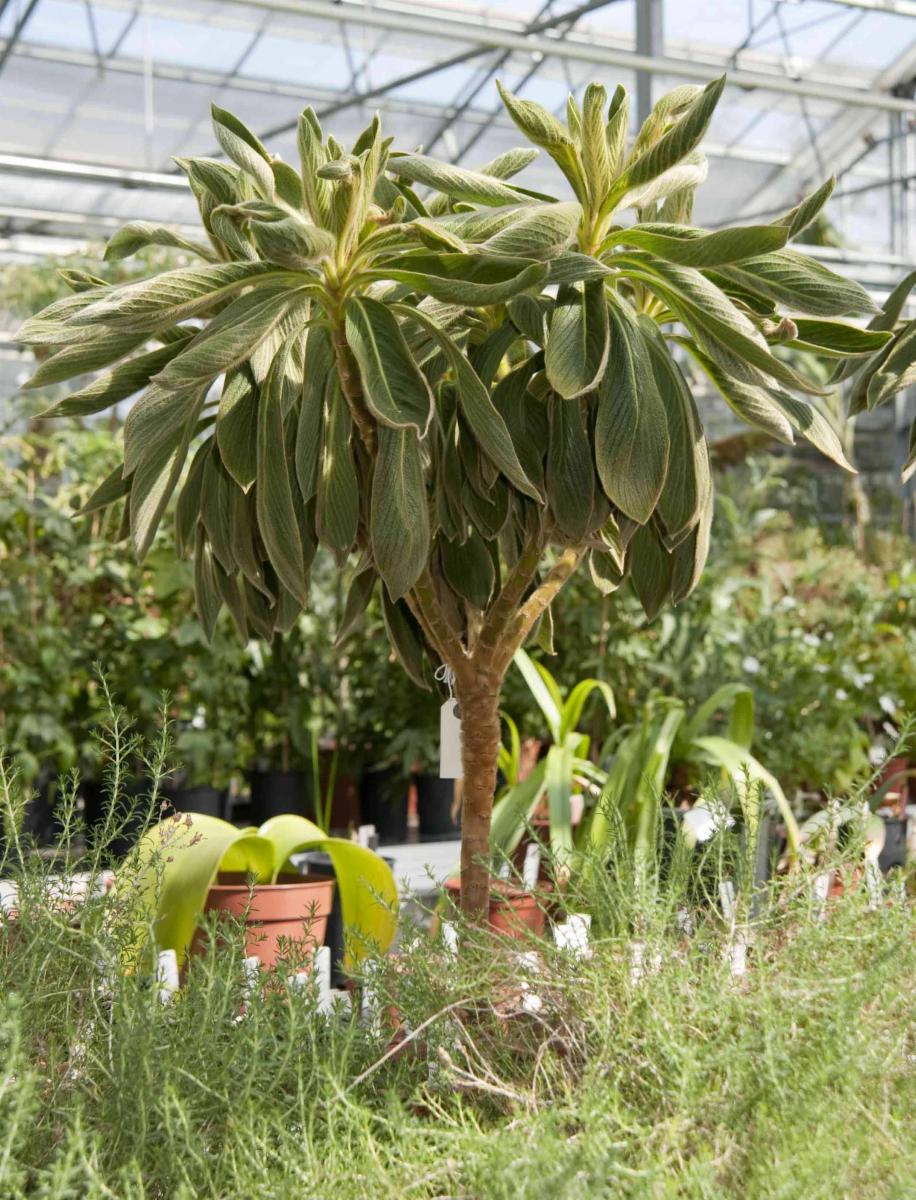
Cylindrocline
VerifiedCylindrocline lorencei
Scientific Classification
Extinct in Wild
Only survives in cultivation
About This Species
Cylindrocline lorencei is a remarkable conservation success story - a species that was brought back from extinction through international scientific collaboration. This small tree in the daisy family (Asteraceae) was native only to Plaine Champagne in Mauritius.
Only one individual was ever observed in the wild, and when that plant died in 1990, the species was considered extinct. However, seeds collected in 1982 were later successfully germinated using embryo rescue techniques.
Physical Characteristics
Plant description:
- Height: Up to 2 meters (6.6 feet)
- Form: Small tree or large shrub
- Branches: Upper branches densely covered in leaves
- Leaves: Olive-green with yellow-green veins, in terminal rosettes
- Leaf arrangement: Spiral pattern, attached directly to stem
Habitat & Distribution
Natural Habitat
Originally found at Plaine Champagne in the upland plateau region of Mauritius. Part of the montane tropical biome. Now being reintroduced in Conservation Management Areas (CMAs) at Pétrin.
Traditional & Medicinal Uses
Traditional Uses
No traditional uses documented due to extreme rarity.
Medicinal Uses
No documented medicinal uses.
Ecological Role
Part of the unique montane flora of Mauritius. The genus Cylindrocline has only two species, both endemic to Mauritius:
- C. lorencei - Extinct in Wild
- C. commersonii - Critically Endangered
Conservation
Threats
The species faced extinction due to:
- Habitat fragmentation
- Invasive alien species
- Genetic bottleneck - Only one individual ever observed
Conservation Efforts
A remarkable international rescue effort:
- 1982: Seeds collected by Conservatoire Botanique National de Brest (CBN Brest)
- 1990: Last wild plant dies, species declared Extinct in Wild
- 2001: Embryo rescue technique successfully germinates seeds
- 2001: Seedlings shared with Royal Botanic Gardens Kew
- 2021: Reintroduction begins at Pétrin in Conservation Management Areas
- Today: About 50 plants thriving in protected environments
This is a landmark example of how biotechnology and international collaboration can save species from extinction.
Sources & References
IUCN Red List, Kew Science, MCB Group, Africa Press, Curtis's Botanical Magazine