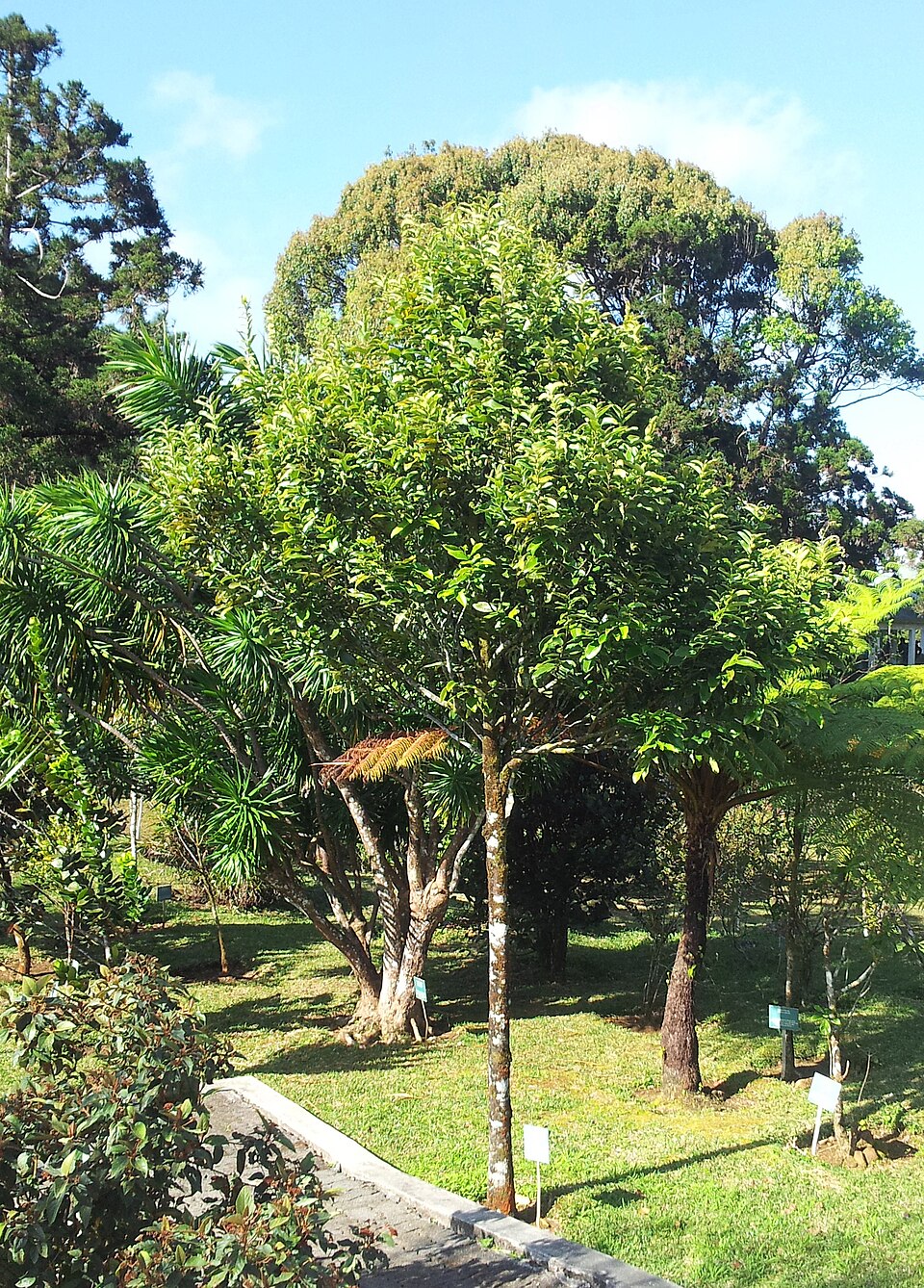
Black Ebony
VerifiedDiospyros tessellaria
Scientific Classification
Vulnerable
High risk of extinction in the wild
About This Species
The Black Ebony (Diospyros tessellaria) is one of eleven endemic ebony species found only in Mauritius. Once the most common and widespread ebony on the island, it has been heavily exploited for its extremely valuable black hardwood.
Mauritian ebony was so prized that in 1638, the Dutch East India Company (VOC) attempted to colonize the island primarily to establish an organized ebony trade.
Physical Characteristics
Tree characteristics:
- Height: Up to 20 meters (66 feet)
- Trunk: Can exceed 1 meter diameter (though largest specimens were logged long ago)
- Growth: Extremely slow-growing, taking decades to reach maturity
- Leaves: Thick, dark green with slightly paler undersides
- Distinctive feature: Leaf margins and veins are mildly translucent when held to light
- Flowers: Small, white, fragrant
- Fruit: Fleshy
Habitat & Distribution
Natural Habitat
Originally widespread throughout Mauritius, from upland rainforests to lowland evergreen forests. Now found primarily on mountain slopes, in private forests, and in the Black River Gorges National Park.
Traditional & Medicinal Uses
Traditional Uses
Historically prized for:
- Furniture making - Extremely high-quality black wood
- Carving - Dense wood ideal for detailed work
- Export - One of the most valuable woods in the world
Medicinal Uses
Limited documentation of traditional medicinal uses. Some Diospyros species have been used in traditional medicine elsewhere.
Ecological Role
Black Ebony is a dominant component of both lowland evergreen forest and upland rainforest ecosystems in Mauritius. It provides:
- Food for native birds and wildlife through its fruits
- Habitat structure in native forest
- Shade for understory plants
Conservation
Threats
Primary threats:
- Historical logging - Centuries of intensive harvesting for valuable timber
- Habitat degradation - Poor regeneration in degraded areas
- Invasive species - Competition from introduced plants
- Slow growth - Recovery takes many decades
Conservation Efforts
Conservation initiatives:
- Protection in Black River Gorges National Park
- Habitat restoration projects
- The Ebony Forest Reserve conservation area
- Propagation programs
- Research into regeneration techniques
IUCN recommends continued habitat restoration as a priority.
Sources & References
IUCN Red List, Wikipedia, Ebony Forest Reserve, Plants For A Future Database
