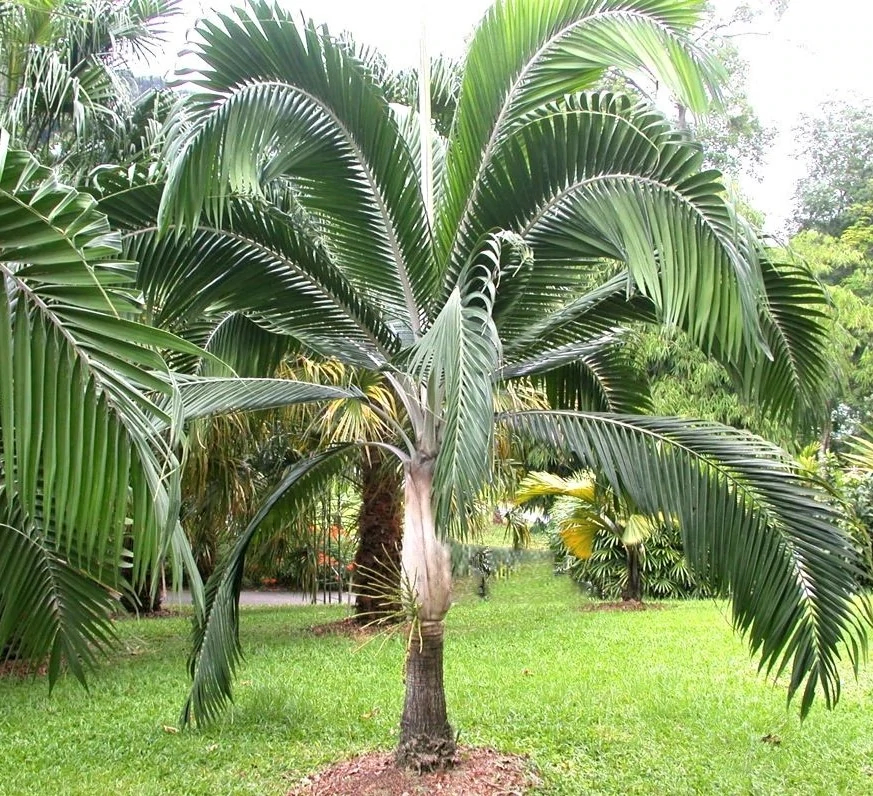
Hurricane Palm
VerifiedDictyosperma album
Scientific Classification
Critically Endangered
Extremely high risk of extinction
About This Species
The Hurricane Palm (Dictyosperma album), also called Princess Palm, is the only species in its genus and is endemic to the Mascarene Islands. The name "Hurricane Palm" refers to its remarkable ability to withstand strong winds by easily shedding leaves.
Despite being widely cultivated throughout the tropics, it has been harvested to near extinction in its native habitat for its prized palm heart.
Physical Characteristics
Notable features:
- Height: Can reach up to 15 meters
- Trunk: Slender, gray, with distinctive ring scars
- Crownshaft: Prominent crownshaft that can be white or pale green
- Fronds: Elegant, arching pinnate fronds
- Adaptation: Leaves easily detach in strong winds, preventing the palm from toppling
Habitat & Distribution
Natural Habitat
Found in humid upland forests of the Mascarene Islands. Three varieties exist:
- D. album var. album - Endemic to Mauritius and Réunion
- D. album var. aureum - Endemic to Rodrigues
- D. album var. conjugatum - Endemic to Round Island (only 2 specimens remain)
Traditional & Medicinal Uses
Traditional Uses
Historically harvested extensively for "palmiste" (palm heart), considered a delicacy. This over-harvesting drove the species to near extinction in the wild.
Medicinal Uses
No documented medicinal uses. The species was primarily valued for food.
Ecological Role
As a native palm, it provides habitat and food for native wildlife. The fruits are consumed by birds which help disperse the seeds. The palm is adapted to cyclone conditions common in the Mascarenes.
Conservation
Threats
Critical threats:
- Over-harvesting - Destructive palm heart extraction (killing the palm)
- Habitat loss - Deforestation for agriculture and development
- Very few wild individuals - Less than 10 of var. album remain in the wild
- Invasive species - Competition from introduced plants
Conservation Efforts
Conservation measures:
- Legal protection in Mauritius
- Ex-situ cultivation ensures species survival
- Protected areas for remaining wild specimens
- Propagation programs at botanical gardens
The species survives primarily through cultivation worldwide.
Sources & References
IUCN Red List, Wikipedia, Palmpedia, Royal Botanic Gardens Kew


